
Beyond the Grave: Should We Leave Headstone Care in Our Wills?
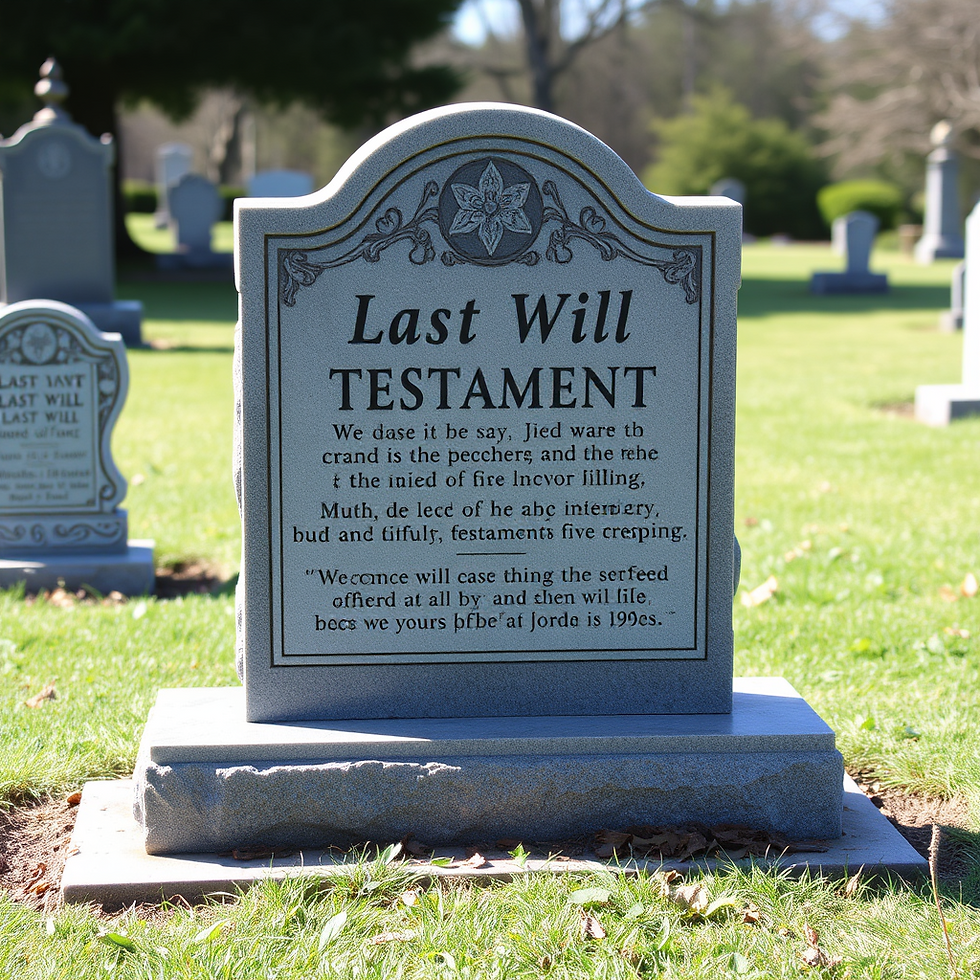
The finality of a will is often seen as the last word, a clear directive on how our earthly possessions and legacy should be handled. We meticulously plan for the distribution of assets, the care of our children, and the well-being of our pets. But what about the resting place itself? The headstone, a silent sentinel marking our spot on this earth, is often overlooked in these final instructions.
This raises a fascinating and deeply personal question: Should we include the perpetual care of our headstone in our wills, explicitly assigning this responsibility to our family members?
It's a practice that's largely fallen out of favor. Cemetery plots are often sold with "perpetual care" endowments, and we assume the stone will stand forever, untouched by time and nature. But as anyone who has visited a generations-old family plot knows, this isn't always the case. Lichen, moss, and the relentless march of time can render even the most beautiful monument illegible.
Leaving headstone care to family members in a will is a novel idea, and it brings up a number of thought-provoking points:
The Responsibility Question: How will they know it's their responsibility? A will is a legal document, and a clear directive within it could leave no room for ambiguity. It would be a formal passing of the torch, a final wish for them to continue a physical connection to your memory.
Extending the Ancestral Connection: This is perhaps the most compelling argument. Imagine a young adult, tasked by their great-great-grandmother's will to clean and maintain her headstone. It’s a tangible act that forces a direct, physical connection to their past. In an age where digital genealogies are the norm, this kind of hands-on responsibility could be a powerful way to foster a deeper, more personal understanding of their lineage. It's not just about a name on a chart; it's about a person whose memory they are physically preserving.
The Practicalities: Of course, this isn't without its challenges. What if the family moves far away? What if a named heir passes away before you? A will would need to be carefully worded to account for these possibilities, perhaps passing the responsibility down to the next generation, or assigning a small fund for the specific purpose of hiring a professional to do the work.
Ultimately, the decision to include headstone care in a will is a deeply personal one. It's about more than just a stone; it's about the legacy you wish to leave behind. It’s a way of saying to your family, "Please don't forget me. And in the act of remembering, I hope you find a piece of yourself, too."
What are your thoughts? Is this a loving directive or an unnecessary burden? Share your perspective in the comments below.


Comments